
What Is CAQH and Why Do Providers Need It?
By George Ruan • July 14, 2026
Last updated: July 14, 2026.
Short answer: CAQH is the provider-data profile many health plans use so they do not have to ask you for the same credentialing and directory information over and over. The current public brand is DataSpring, powered by CAQH, and the clinician-facing workflow still centers on the CAQH Provider Data Portal.
If you are a therapist, psychologist, social worker, prescriber, or other clinician trying to get credentialed with commercial insurance plans, you should expect to need a CAQH Provider Data Portal profile.
Google question answered: What is CAQH and why do providers need it? Providers need CAQH because payers use the authorized, attested profile for credentialing, enrollment support, directory data, and other provider-data operations.
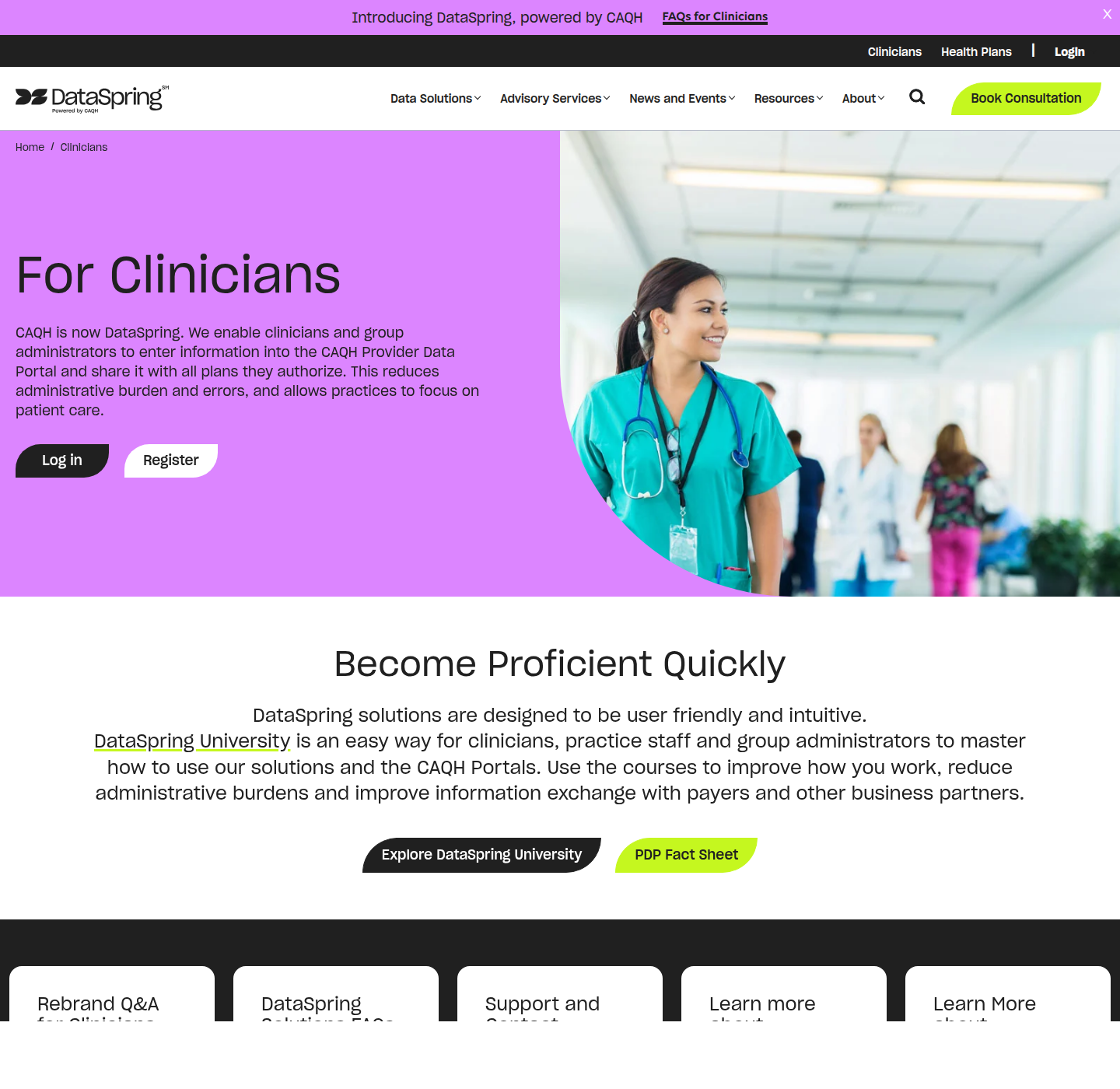
Screenshot source: DataSpring for Clinicians.
Sections
What Is CAQH?
CAQH was historically known to providers through CAQH ProView. Public CAQH/DataSpring materials now describe the Provider Data Portal as the place where clinicians and group administrators enter professional and practice information and share it with plans they authorize.
The Provider User Guide says the portal is used for providers to self-report professional and practice information to payers, hospitals, large provider groups, and health systems. It also says the portal is free for providers to use.
In practical terms, your CAQH profile is a reusable packet of provider data:
Identity data: legal name, individual NPI, SSN/TIN checks, demographics, contact details, and CAQH Provider ID.
Licensure and education: license details, taxonomy, training history, board or certification data when applicable, and work history.
Practice details: locations, phone/fax, accepting-new-patients status, specialties, telehealth, hospital affiliations when relevant, and billing contacts.
Documents: professional license, malpractice face sheet, DEA or controlled-substance documents if applicable, and signed release forms.
Payer permissions: which participating organizations may access your profile.
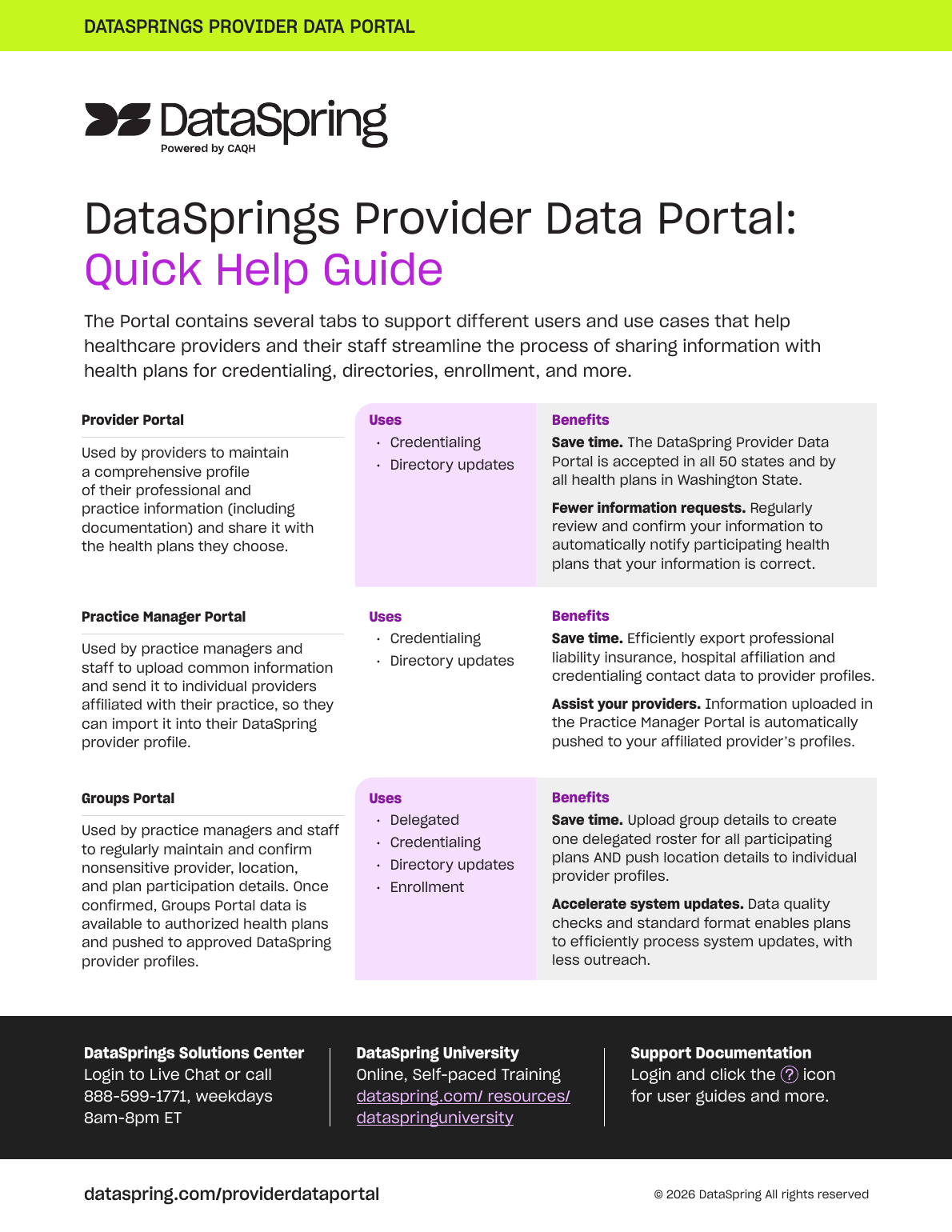
Screenshot source: DataSpring Provider Data Portal Quick Help Guide.
Why Providers Need CAQH
You need CAQH because many payers would rather read one authorized profile than maintain a separate full credentialing packet for every provider. When a plan asks for your CAQH number, they are usually trying to pull your standardized profile, review it, and move credentialing or directory work forward.
For a private-practice therapist, that usually matters in four places:
Credentialing and contracting: commercial plans may request CAQH so they can review your professional information during network enrollment or recredentialing.
Provider directories: plans use current provider data to keep directory listings cleaner and reduce repeated outreach.
Group practice administration: practice managers can help maintain shared practice data, while each clinician still needs accurate individual provider data.
Claim and enrollment cleanup: bad or expired provider data can slow down payer operations, especially when the profile is not authorized or attested.
CAQH does not replace every payer application. A payer can still require its own contract, portal setup, EFT form, W-9, Medicaid enrollment, state-specific attestation, or group roster. CAQH is the common data layer, not the whole enrollment process.
Who Can See Your CAQH Profile?
Health plans and other participating organizations do not automatically get unlimited access to everything just because you created a profile. You still authorize the organizations that may access your data. That authorization step is one of the core steps in the Provider User Guide.
This is why a payer may say, "We cannot access your CAQH." Usually that means one of these things is true:
you have not authorized that payer or organization,
your profile is incomplete,
your required documents are missing or not approved,
your attestation is expired, or
the payer has not correctly added you to its CAQH roster.
Is CAQH Required?
DataSpring says participation in the Provider Data Portal is voluntary. In practice, voluntary does not mean optional for credentialing. If the plan you want to join uses CAQH, refusing to maintain a CAQH profile can stall the payer process.
Think of it this way: you may not be legally required to have CAQH, but if the payer uses CAQH as its credentialing data source, you need a profile to make that process workable.
How Often Do You Need to Update CAQH?
The key habit is re-attestation. DataSpring resources explain that providers are generally required to attest their profiles every 120 days, with a different cycle noted for Illinois providers. The portal can move a profile into Expired status if the provider does not attest within the required timeframe.
The operational rule is simple: update CAQH whenever something meaningful changes, and do not ignore attestation reminders.
new license expiration date,
new malpractice policy,
new practice location, phone number, or group address,
name change or taxonomy change,
payer asks for access, or
credentialing is stuck because a plan says your profile is expired or unavailable.
Common CAQH Mistakes
Creating only a group account. A group may need shared practice data, but each individual clinician still needs a complete provider profile.
Forgetting payer authorization. A complete profile is not useful to a payer that cannot access it.
Letting malpractice or license documents expire. Credentialing teams often cannot clear a file until the document status is acceptable.
Treating attestation as paperwork instead of revenue protection. An expired profile can slow credentialing, directory updates, and payer cleanup work.
Using inconsistent practice information. CAQH, NPPES, payer contracts, EFT records, and claims should tell the same story about the provider and practice.
Next Step
If you are starting from zero, read How Do Providers Create and Complete a CAQH Account? for the registration, profile, authorization, attestation, and document checklist.
Sources
Need help getting payer-ready?
Bomi helps with CAQH, payer applications, credentialing packets, attestations, effective dates, roster updates, and credential management.
Get credentialing help